Accurate weighing plays an important role in many businesses across the UAE. Whether you operate a warehouse, manufacturing facility, laboratory, retail store, logistics company, food business, or industrial site, choosing the right weighing scale can improve efficiency, reduce measurement errors, and support better day-to-day operations.
However, weighing scales are available in many different capacities, sizes, accuracy levels, and configurations. Choosing a scale simply based on price or maximum capacity may result in equipment that does not properly meet your business requirements.
In this guide, we explain how to choose the right weighing scale for your business in the UAE and the most important factors you should consider before purchasing.
-
Identify What You Need to Weigh
The first step is understanding exactly what your business will be weighing.
Different industries require different types of weighing equipment. For example, a laboratory may require extremely precise measurements of small samples, while a warehouse may need a heavy-duty scale capable of weighing large boxes, pallets, or industrial materials.
Common applications include:
- Warehouses and logistics
- Manufacturing facilities
- Laboratories
- Retail businesses
- Food processing companies
- Construction companies
- Shipping and freight operations
- Factories
- Agricultural businesses
- Industrial workshops
Clearly identifying your application will help you narrow down the most suitable scale.
Businesses handling boxes, drums, pallets, and other heavy materials can consider Alfalah Scales’ Platform Scales, which are designed for practical commercial and industrial weighing applications.
-
Determine the Required Weight Capacity
Every weighing scale has a maximum weight capacity.
You should choose a scale that can comfortably handle the heaviest item you expect to weigh. Purchasing a scale with a capacity that is too low can damage the equipment or produce unreliable readings.
At the same time, purchasing a scale with an unnecessarily high capacity may reduce the level of precision available for lighter products.
For example, if your normal products weigh between 50 kg and 200 kg, you may not need a scale designed for several tonnes.
Ideally, choose a scale with slightly more capacity than your expected maximum load. This provides flexibility while helping protect the equipment from accidental overloading.
-
Consider the Level of Accuracy You Need
Accuracy requirements vary significantly between industries.
A warehouse measuring large shipments may not require the same level of precision as a laboratory measuring small quantities of chemicals or samples.
Businesses requiring highly precise measurements should consider a Laboratory Scale designed specifically for smaller quantities and greater measurement accuracy.
Industrial operations usually prioritize durability, capacity, and consistency, while laboratories and specialized businesses may prioritize extremely fine measurement divisions.
Always compare both:
- Maximum capacity
- Scale readability or division size
These two specifications help determine whether the weighing scale is appropriate for your application.
-
Choose the Right Type of Weighing Scale
Different weighing scale designs are suitable for different business environments.
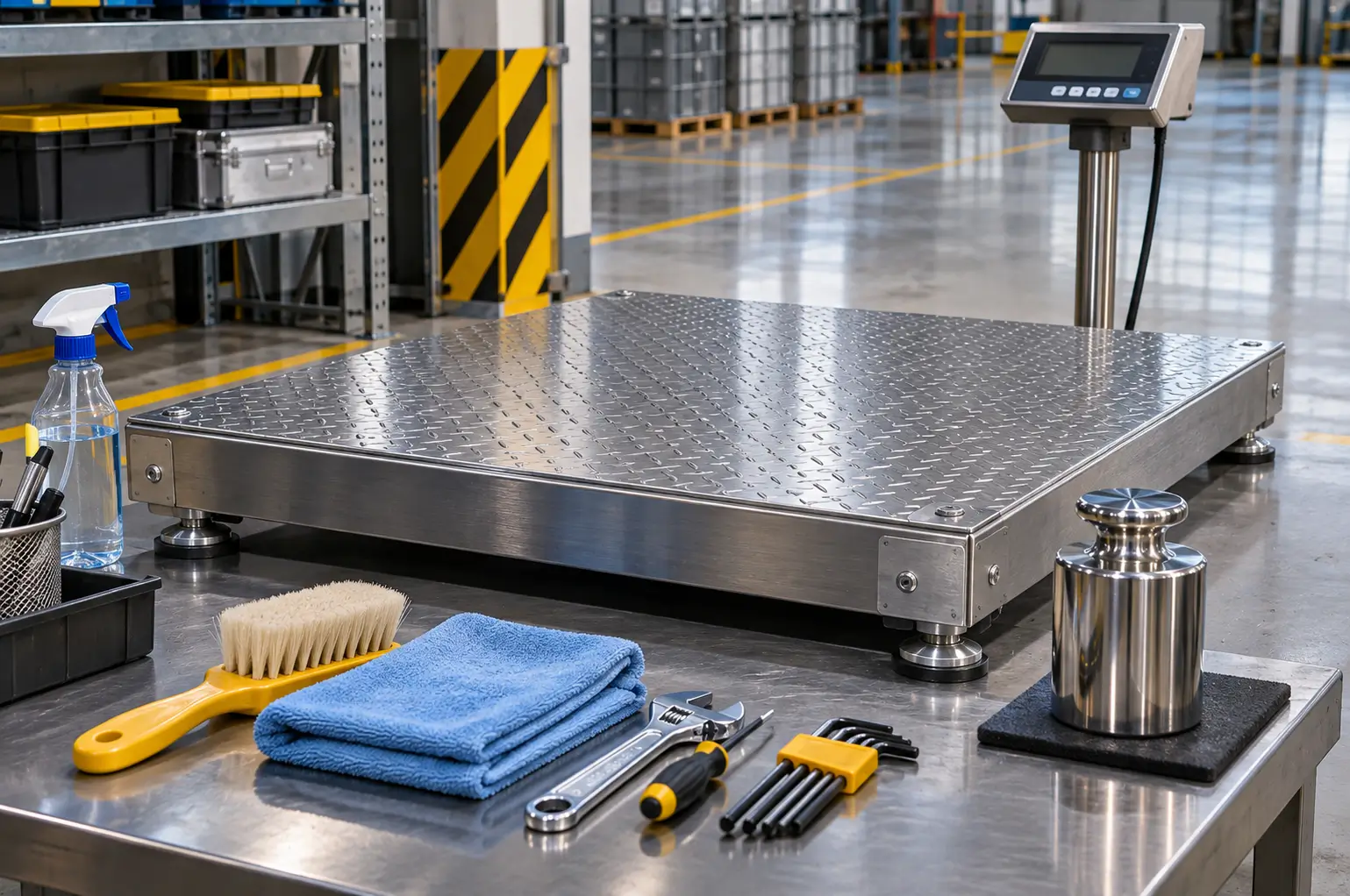
Platform Scales
Platform scales are commonly used in warehouses, factories, production areas, shipping departments, and commercial businesses.
They provide a large surface where boxes, containers, materials, and other products can easily be placed for weighing.
Explore the Platform Scales available from Alfalah Scales if your business regularly weighs medium-to-heavy commercial products.
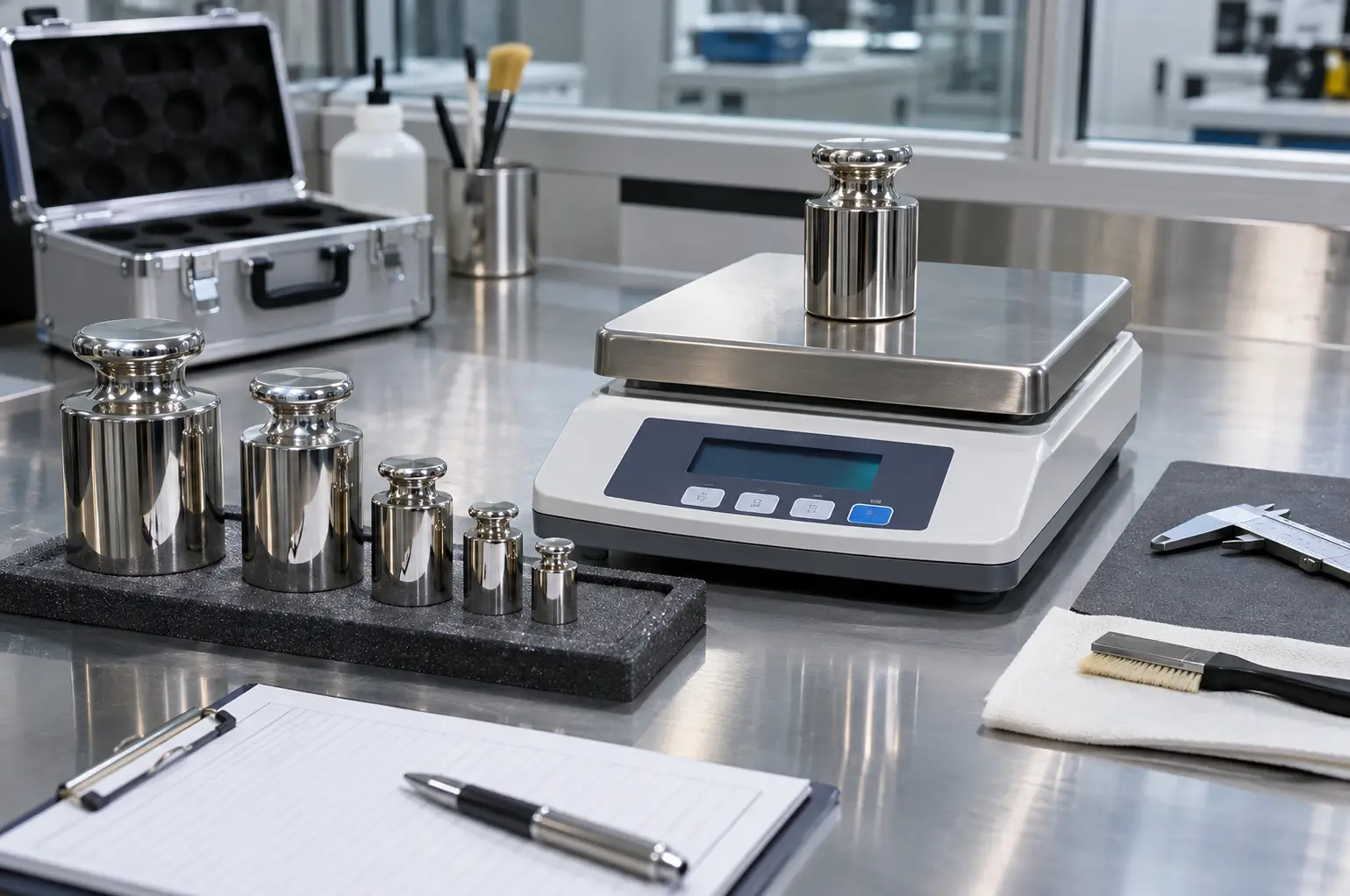
Laboratory Scales
Laboratory scales are designed for applications where precision is especially important.
They are commonly suitable for:
- Laboratories
- Quality-control departments
- Chemical applications
- Research environments
- Pharmaceutical-related operations
- Small product measurements
Businesses requiring highly accurate measurements can explore Alfalah Scales’ Laboratory Scale solutions.
Crane Scales
When materials cannot easily be placed on a normal platform, a crane scale may provide a more practical solution.
Crane scales are commonly used to measure suspended loads in warehouses, workshops, industrial facilities, manufacturing operations, and material-handling applications.
Alfalah Scales also supplies Crane Scale solutions for businesses requiring suspended weighing equipment.
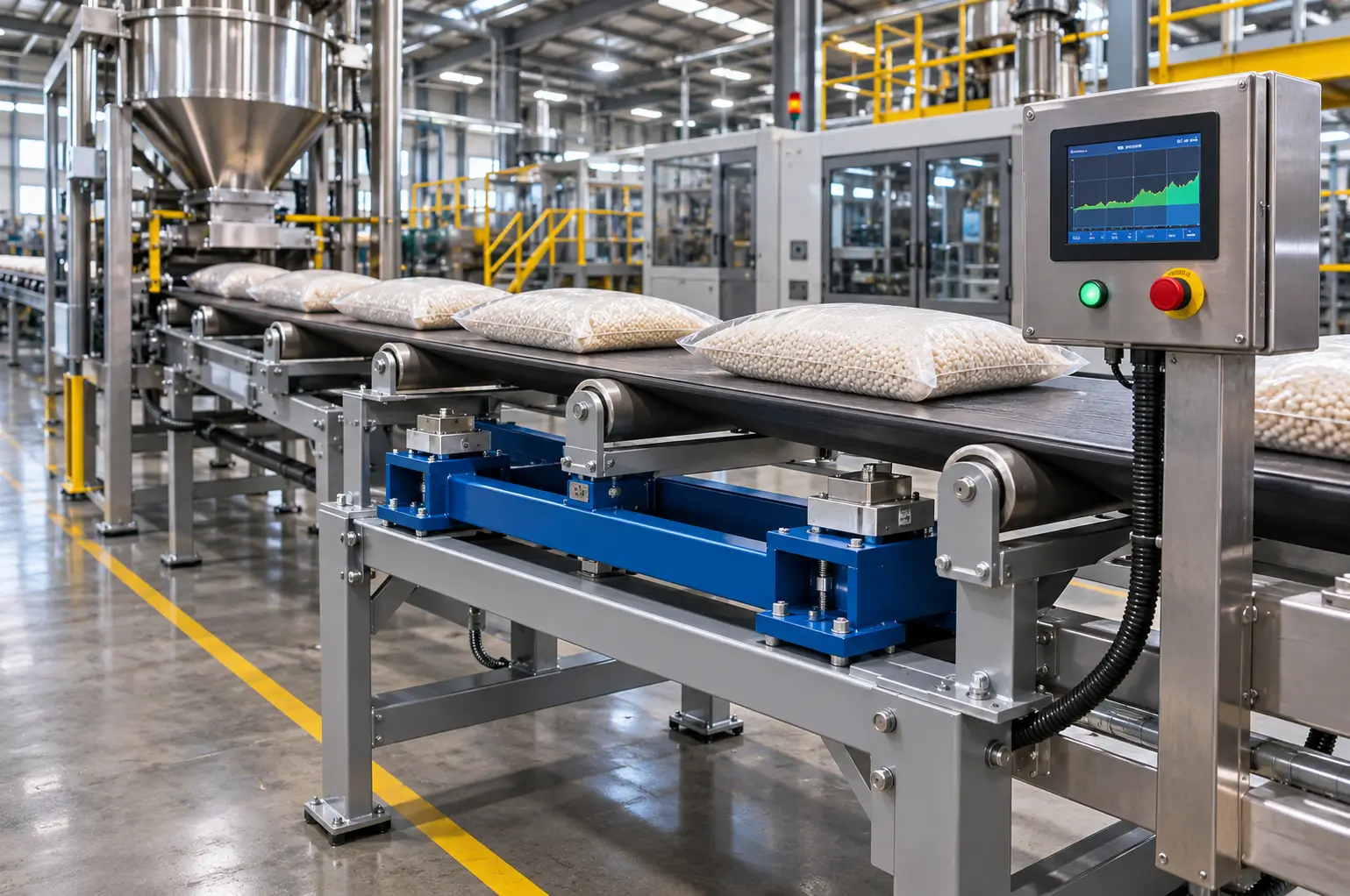
Weighbridge Systems
Businesses dealing with trucks, transportation, construction materials, logistics, waste management, or large industrial shipments may require a weighbridge rather than a conventional weighing scale.
A complete weighbridge system typically contains multiple components responsible for measuring, displaying, and processing weight information.
Alfalah Scales provides weighing equipment and related components including Weighbridge External Displays, indicators, load cells, junction boxes, and printers.
-
Consider the Working Environment
The environment where the scale will be installed can significantly affect its performance and lifespan.
Before purchasing, consider whether the scale will operate:
- Indoors or outdoors
- In dusty environments
- In humid areas
- Around water
- Inside refrigerated environments
- In extremely hot conditions
- Around chemicals
- In demanding industrial areas
Warehouses and industrial facilities in the UAE can experience high temperatures and challenging working conditions. Choosing equipment suitable for the environment can reduce maintenance requirements and improve long-term reliability.
For demanding industrial applications, ask your weighing-scale supplier about platform construction, load-cell protection, operating temperature, and environmental resistance.
-
Select a Suitable Load Cell
A load cell is one of the most important components in many electronic weighing systems.
It converts mechanical force into an electrical signal that the weighing indicator can interpret and display as weight.
Choosing the correct load cell depends on factors such as:
- Maximum load
- Required accuracy
- Installation configuration
- Environmental conditions
- Number of load cells
- Platform or weighbridge design
If your business is building, repairing, or upgrading an industrial weighing system, explore the Load Cells available from Alfalah Scales.
Using properly selected load cells can contribute significantly to accurate and reliable weighing performance.
-
Choose the Right Weighing Indicator
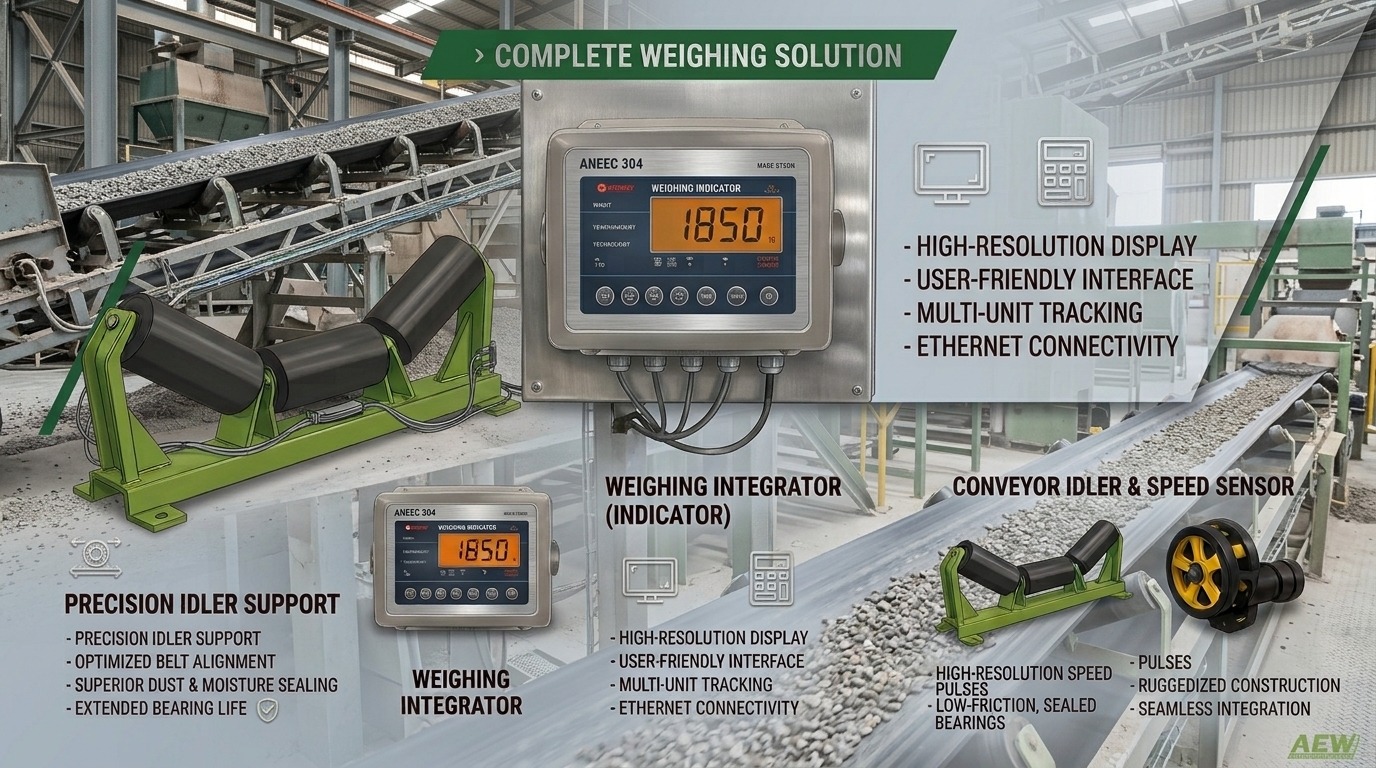
The weighing indicator is the component that displays the weight information received from the scale or load cells.
Modern indicators may offer additional functionality such as:
- Tare function
- Zero function
- Unit conversion
- Printing connectivity
- Data communication
- Large digital displays
- External-display connectivity
- Multiple load-cell support
Alfalah Scales offers different Weighing Indicators, including models suitable for various commercial and industrial weighing systems.
Consider the information your employees need to see and whether your weighing equipment needs to connect with printers, computers, external displays, or other business systems.
-
Think About Scale Size and Available Space
Capacity is not the only important consideration.
The physical dimensions of the weighing platform should also match the items you plan to weigh.
A platform that is too small may make it difficult or unsafe to position large cartons, pallets, containers, or industrial materials.
Measure your available installation area and consider:
- Platform length
- Platform width
- Scale height
- Loading space
- Operator movement
- Nearby equipment
- Electrical connections
For busy warehouses, choosing the correct platform dimensions can make daily weighing much faster and safer.
-
Consider Digital Features
Digital weighing technology has become widely used because it offers convenient readings and useful operational features.
Depending on the model, digital scales can provide functions such as tare calculation, unit conversion, data storage, and easier-to-read weight displays.
Businesses interested in understanding these systems further can also read:
Digital weighing equipment can be especially useful for businesses that perform frequent measurements throughout the working day.
-
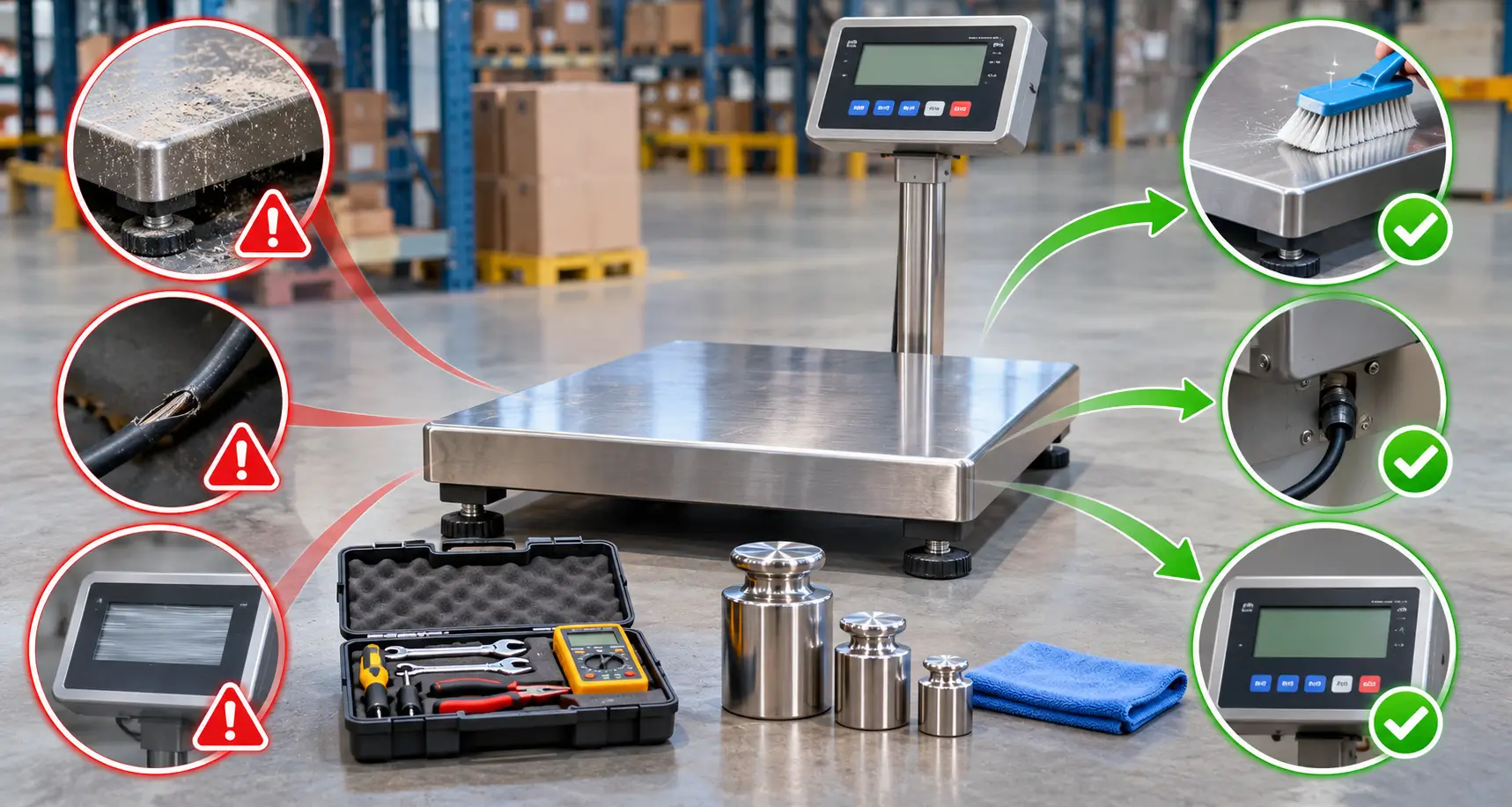
Check Calibration and Maintenance Requirements
Even a high-quality weighing scale requires proper calibration and maintenance.
Calibration helps confirm that the scale continues to provide measurements within the required accuracy range.
Factors such as heavy usage, relocation, impacts, environmental conditions, and component wear can affect weighing performance over time.
Businesses should therefore establish a regular maintenance and inspection schedule.
Depending on the equipment, maintenance may include:
- Cleaning the weighing platform
- Checking cables and connectors
- Inspecting load cells
- Checking indicator performance
- Testing weighing accuracy
- Inspecting junction boxes
- Recalibrating the equipment when necessary
Preventive maintenance can reduce unexpected breakdowns and extend the operating life of weighing equipment.
-
Consider Future Business Requirements
Your weighing requirements may increase as your business grows.
If your company expects higher production volumes, heavier shipments, expanded warehouse operations, or increased automation, choosing equipment with some flexibility can help avoid another major purchase later.
Consider whether you may eventually require:
- Higher capacity
- Larger platforms
- Additional load cells
- Printers
- External displays
- Computer connectivity
- Additional weighing stations
Selecting scalable weighing equipment can support future expansion.
-
Compare Quality Instead of Price Alone
Price is naturally an important consideration, but the cheapest weighing scale is not always the most economical option over the long term.
A low-quality scale may experience:
- Frequent calibration problems
- Unstable measurements
- Component failures
- Display issues
- Load-cell damage
- Increased maintenance costs
- Shorter equipment lifespan
For businesses where accurate weight measurements affect inventory, production, billing, shipping, or quality control, reliability should remain a priority.
Consider the overall value of the equipment, including durability, accuracy, parts availability, maintenance support, and expected working life.
-
Buy From an Experienced Weighing Scale Supplier in the UAE
Choosing the correct equipment becomes easier when you work with a supplier that understands different weighing applications.
An experienced supplier can help determine the appropriate:
- Scale type
- Capacity
- Platform dimensions
- Accuracy
- Indicator
- Load cells
- Accessories
- Installation configuration
Al Falah Weight Equipment Tr L.L.C. provides a range of weighing equipment and components in the UAE, including platform scales, laboratory scales, crane scales, indicators, load cells, weighbridge accessories, printers, and junction boxes.
Visit Alfalah Scales to explore weighing solutions for commercial and industrial requirements.
Final Thoughts
Choosing the right weighing scale for your business in the UAE requires more than simply selecting the highest capacity model.
Start by understanding what you need to weigh, the required accuracy, operating environment, platform size, capacity, and daily usage. You should also consider load cells, indicators, maintenance requirements, connectivity, and future business growth.
The right weighing equipment can help your company achieve consistent measurements, improve workflow efficiency, reduce operational errors, and support reliable business processes.
Whether you require a platform scale for warehouse operations, a laboratory scale for precision measurements, a crane scale for suspended loads, or weighing components for an industrial system, selecting equipment that matches your specific application will provide better performance and long-term value.