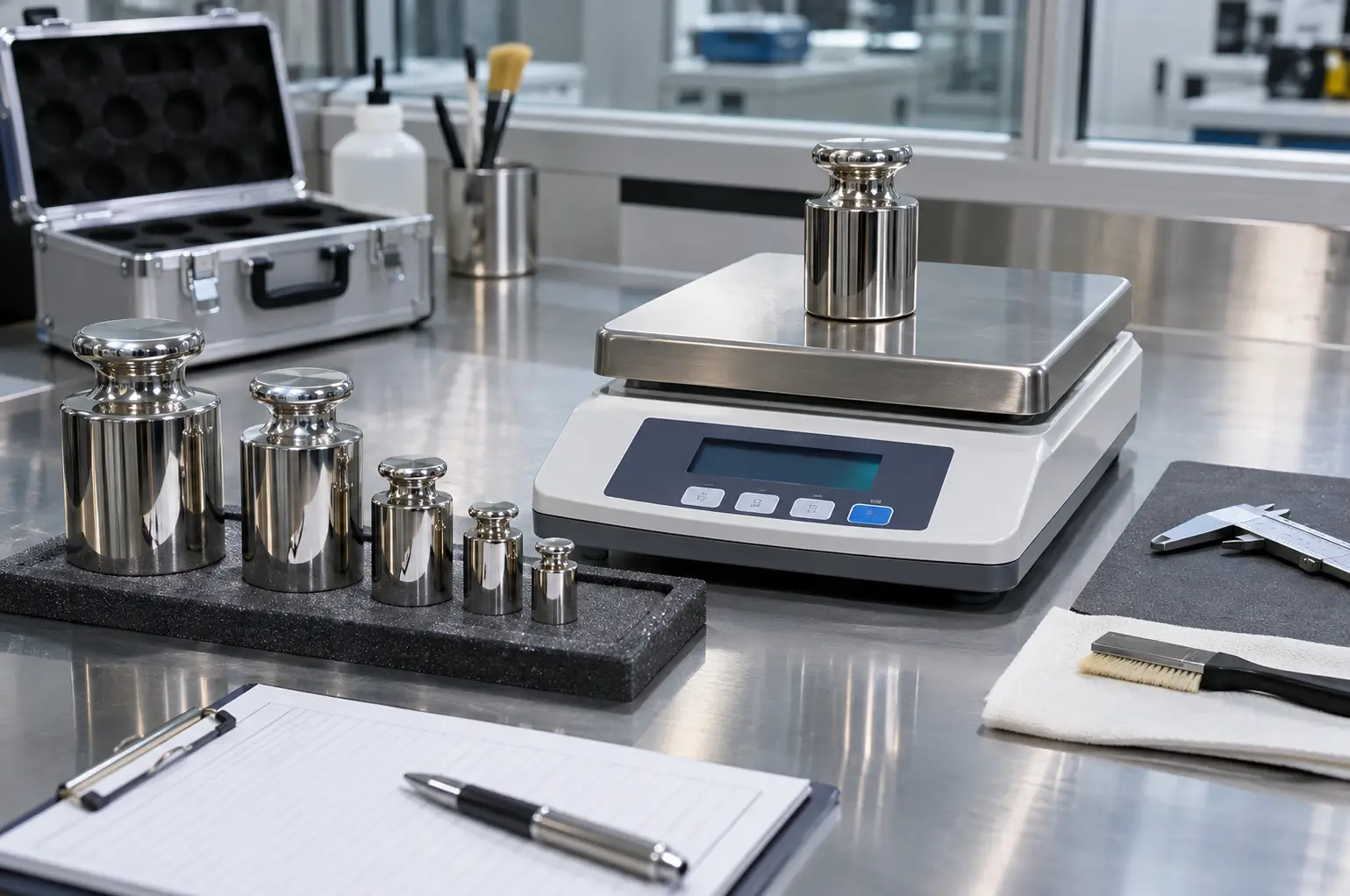
A weighing scale can look perfectly normal and still be giving incorrect readings.
In many businesses, that small difference goes unnoticed because the display works, the platform appears undamaged, and employees continue using the equipment as usual. But a scale that is only slightly out of tolerance can create bigger problems over time, especially when weight influences pricing, inventory, production, shipping, or quality control.
That is why regular weighing scale calibration should be treated as part of routine equipment management rather than something done only after a scale begins showing obvious problems.
For warehouses, manufacturers, food businesses, logistics companies, laboratories, and industrial facilities, calibration helps ensure that every weight recorded is based on a dependable measurement.
What Is Weighing Scale Calibration?
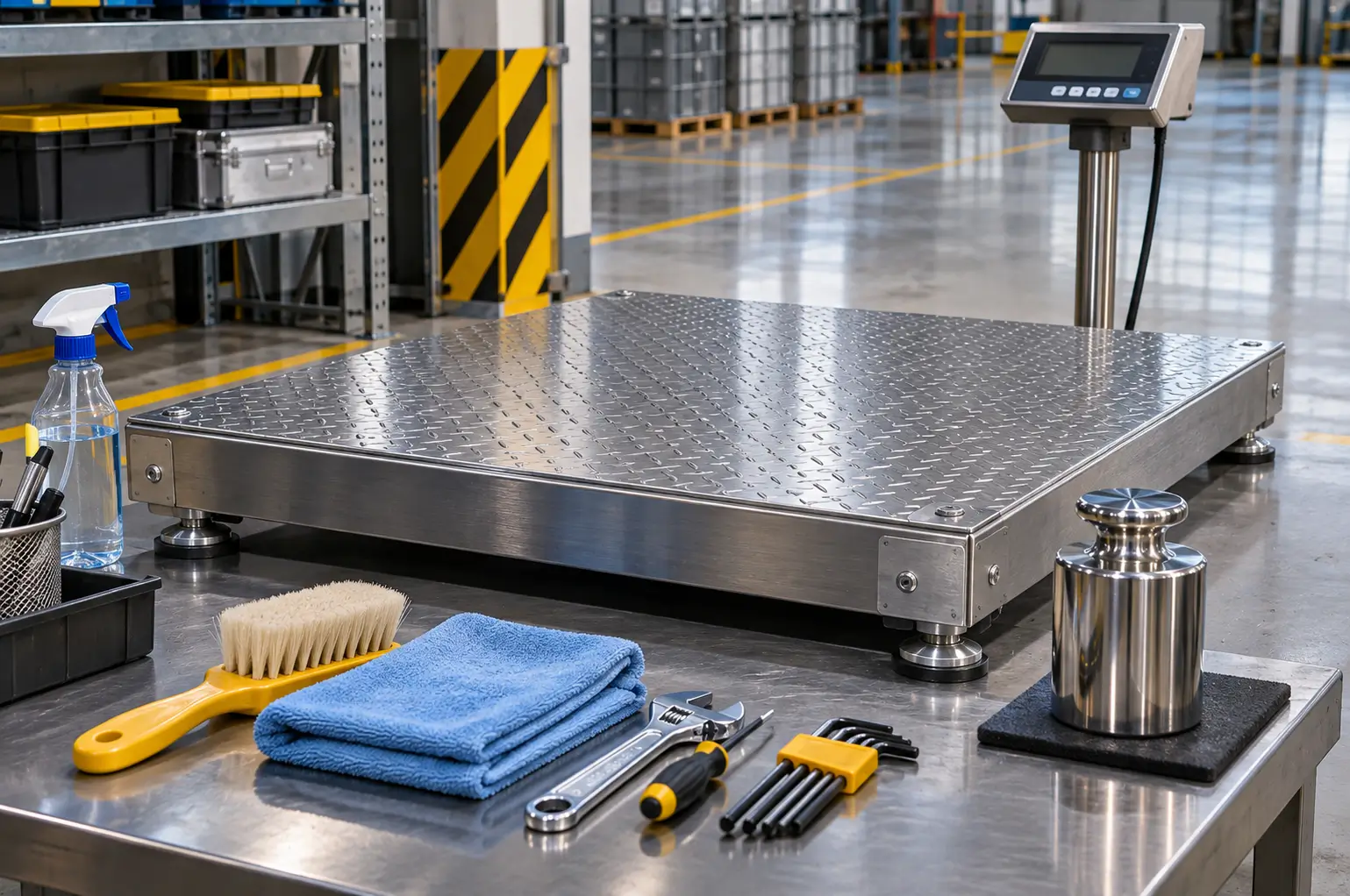
Weighing scale calibration is the process of comparing a scale’s reading against a known reference weight.
A technician places certified or traceable test weights on the scale and checks whether the displayed value matches the expected value.
If the reading is outside the required tolerance, the scale may need adjustment, servicing, or further inspection.
Calibration helps answer a simple but important question:
Can the measurement shown on the scale be trusted?
The internal components responsible for measurement also play an important role in accuracy. Businesses interested in how weighing equipment detects force can read what a load cell is and how it works.
Why Do Weighing Scales Lose Accuracy?
Scales do not necessarily remain accurate forever after installation.
Regular use can gradually change their performance.
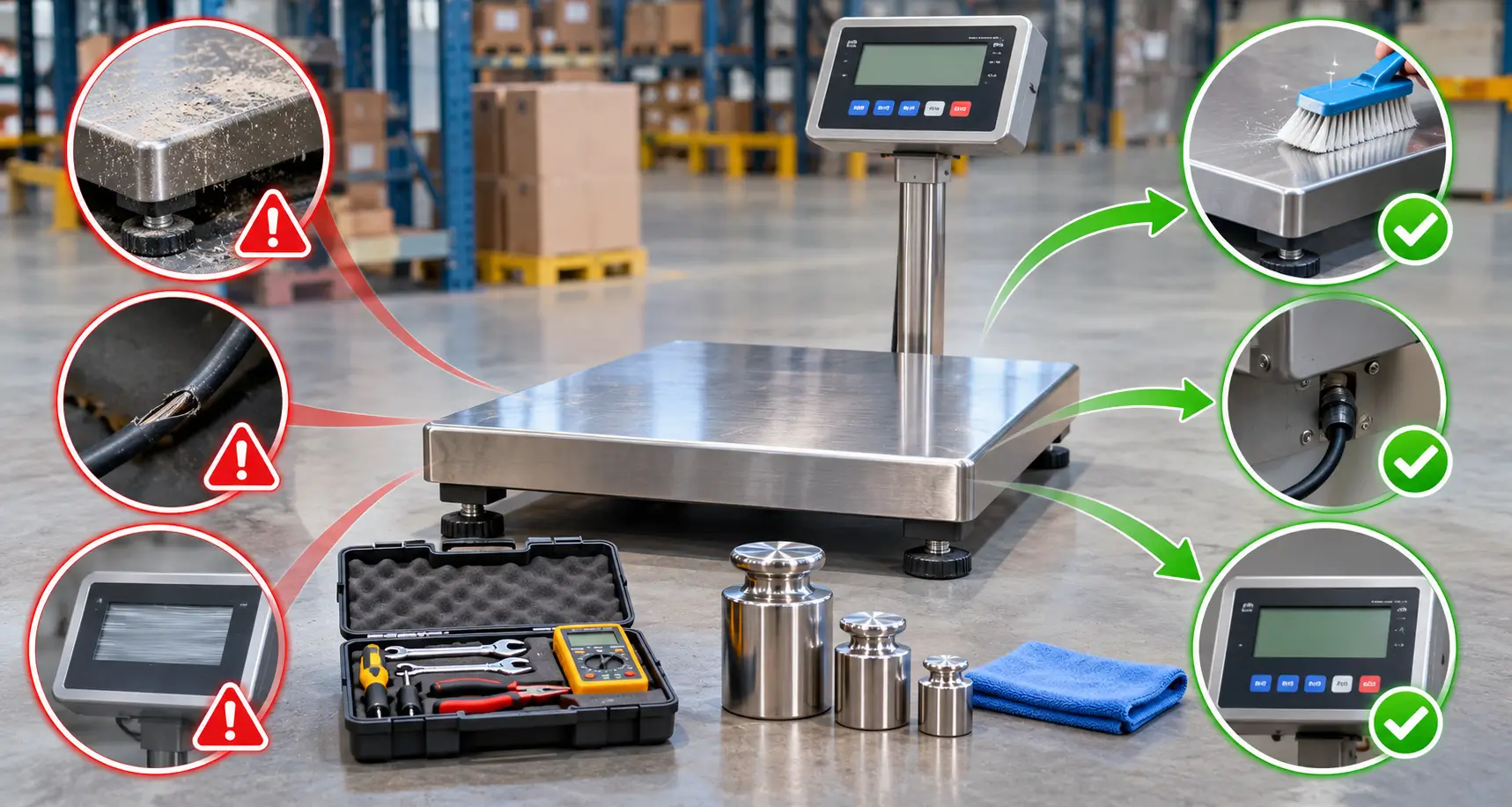
Several factors can contribute to measurement drift, including:
- Frequent loading and unloading
- Heavy or sudden impacts
- Overloading
- Vibration from nearby machinery
- Temperature changes
- Moisture and humidity
- Dust and debris
- Movement or relocation of the scale
- Wear in mechanical components
- Electrical or load-cell problems
In a warehouse, for example, a heavy pallet placed roughly on a scale may affect its performance. In a food facility, water exposure or frequent cleaning can create different challenges.
Where moisture is a regular concern, businesses may also find it useful to understand the benefits of waterproof weighing scales.
1. Calibration Protects Measurement Accuracy
Accuracy is the main reason calibration matters.
If a scale should display 100 kg but consistently shows 98.5 kg, every measurement made with that scale contains an error.
The impact depends on how the weight is being used.
In manufacturing, incorrect raw-material quantities can affect production.
In logistics, wrong weights can lead to inaccurate freight records.
In retail or commercial transactions, even small measurement errors may affect pricing.
Regular calibration identifies these differences before they become part of everyday business records.
2. It Helps Maintain Consistent Product Quality
Many manufacturing processes depend on precise ingredient or material quantities.
Consider a business producing chemicals, coatings, food products, plastics, or construction materials.
If each batch requires specific weight ratios, an inaccurate scale may slowly change the formulation even though staff are following the same recipe.
That can result in inconsistent products, rejected batches, or unnecessary material consumption.
The same principle applies to larger integrated systems. For example, tank weighing systems improve industrial measurement accuracy by monitoring material directly inside tanks and vessels, but those systems also depend on accurate load-cell readings and proper verification.
3. Calibration Reduces Costly Material Errors
Small weighing inaccuracies can become expensive when repeated hundreds or thousands of times.
Imagine a production process that accidentally adds 1% more material than required because of an inaccurate scale.
On one batch, that difference may appear insignificant.
Across months of production, however, it can represent a substantial amount of wasted raw material.
Under-weighing can be equally problematic because products may fail to meet specifications or customer expectations.
Calibration helps businesses control both situations by keeping weighing equipment within acceptable accuracy limits.
4. It Improves Inventory Accuracy
Inventory systems are only as reliable as the information entered into them.
Where weight is used to determine stock quantities or material movement, inaccurate scales can create differences between system records and actual inventory.
This is particularly relevant for warehouses handling bulk materials, industrial components, or packaged goods.
For smaller identical parts, businesses may use counting scales to improve inventory accuracy. However, if the underlying weight measurement is inaccurate, the calculated quantity can also become unreliable.
Regular calibration therefore supports both weight accuracy and inventory accuracy.
5. Calibration Supports Reliable Shipping and Logistics
Logistics companies rely heavily on weight.
Shipment weight may influence freight charges, load planning, transport documentation, and vehicle capacity.
If a warehouse scale reads incorrectly, employees may prepare records using inaccurate information.
The difference might only be discovered when a carrier weighs the shipment again.
That can lead to billing adjustments or operational delays.
Businesses using pallet weighing scales in warehouse and logistics operations should include routine calibration in their maintenance procedures, particularly where pallet weights are used for shipping decisions.
6. It Helps Detect Equipment Problems Early
Calibration is not only about changing a number on a display.
Unexpected calibration results can reveal deeper equipment issues.
A scale that repeatedly fails verification may have:
- A damaged load cell
- Loose connections
- Mechanical interference
- An unstable platform
- Environmental interference
- Electronic faults
Finding these problems early allows businesses to repair equipment before the issue becomes more serious.
This can reduce unexpected downtime and prevent staff from continuing to use unreliable equipment.
7. Calibration Supports Process Automation
Many modern weighing systems are connected to automated production equipment.
A scale may send measurements to a PLC, computer, batching controller, or production management system.
If the weighing device is inaccurate, the automation system will still act on the incorrect measurement.
That means automation does not remove the need for calibration; it actually makes dependable measurement even more important.
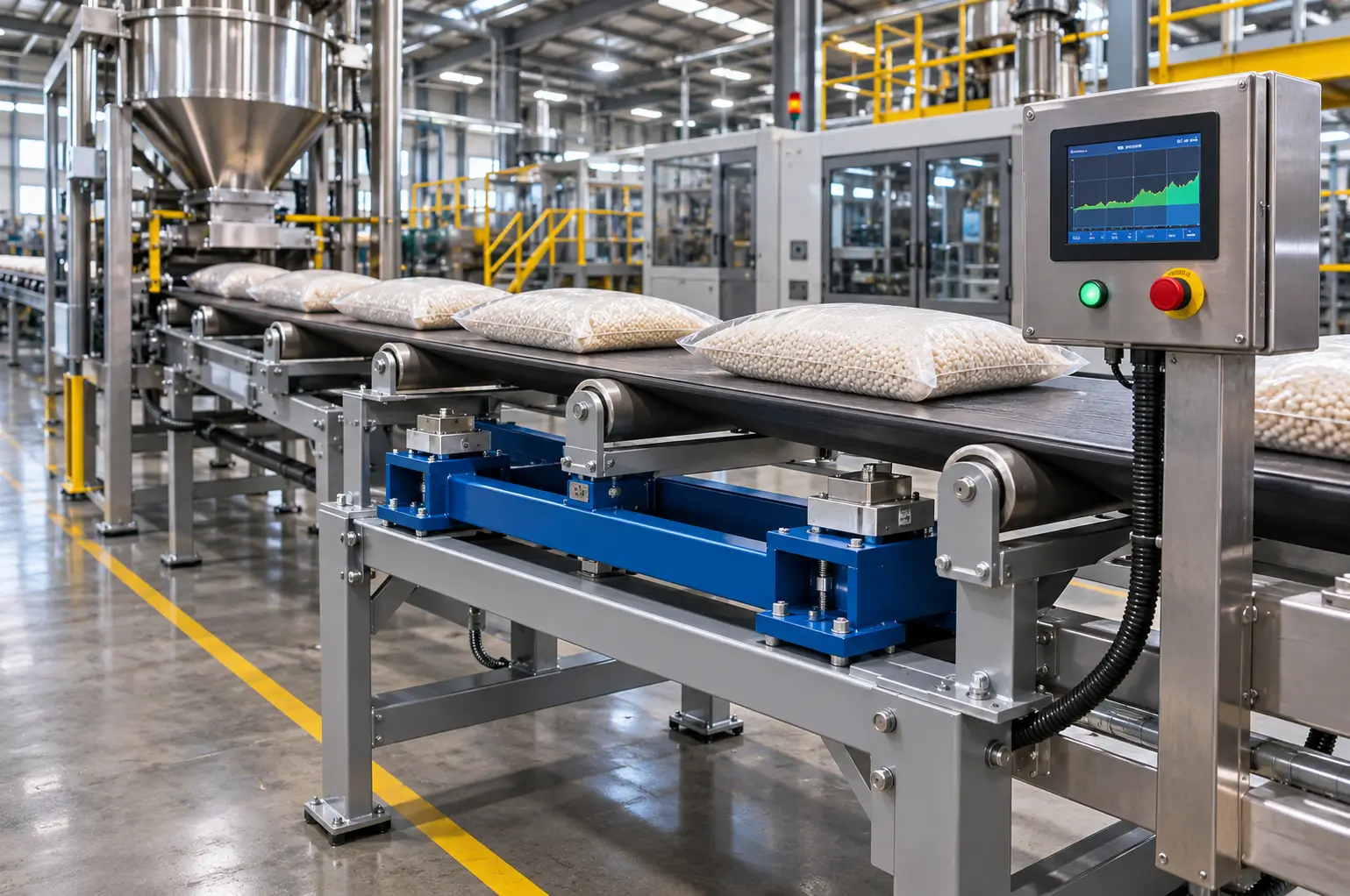
The same applies to conveyor belt weighing systems used in manufacturing, where inaccurate weight or speed measurements can affect material-flow calculations across an entire production line.
How Often Should a Weighing Scale Be Calibrated?
There is no single calibration interval suitable for every business.
The right frequency depends on how the scale is used.
A scale operating occasionally in a controlled environment may require less frequent calibration than equipment used continuously in a busy warehouse or factory.
Factors to consider include:
Usage frequency: Heavily used scales generally require more regular verification.
Importance of accuracy: Critical production or commercial measurements justify tighter calibration schedules.
Operating environment: Moisture, vibration, temperature changes, and dust may influence performance.
Load conditions: Frequent heavy loading or impact can affect weighing components.
Previous calibration results: Equipment that regularly drifts may need more frequent checks.
Businesses should also follow manufacturer recommendations and any applicable regulatory or quality-system requirements.
Calibration vs Adjustment: What Is the Difference?
These terms are often used as though they mean the same thing, but they are different.
Calibration checks how closely the scale’s measurement matches a known reference.
Adjustment changes the scale so its measurement moves closer to the correct value.
A technician may calibrate a scale and determine that no adjustment is necessary.
If the readings fall outside tolerance, an adjustment or repair may then be required.
Understanding this difference is important because simply changing the scale’s setting without proper verification does not provide evidence that the instrument is accurate across its operating range.
When Should a Scale Be Checked Immediately?
Businesses should not always wait for the next scheduled calibration.
A scale should be checked after events that could affect its performance, including:
- Relocating the equipment
- Major repairs
- Overloading
- Physical impact
- Unusual or unstable readings
- Changes to the weighing platform
- Load-cell replacement
- Significant environmental changes
If measurements suddenly appear inconsistent with previous results, the equipment should also be verified before continuing critical operations.
Choosing the Right Weighing Equipment Matters Too
Calibration can maintain a properly selected scale, but it cannot compensate for equipment that is unsuitable for the application.
Capacity, readability, environment, platform size, and load-cell configuration should all match the intended use.
For industrial installations, businesses can also review how to choose the right load cell for a weighing system to understand why correct component selection matters for long-term measurement performance.
Final Thoughts
Regular weighing scale calibration protects one of the most important parts of any weighing process: trust in the measurement.
It helps businesses maintain accurate records, improve production consistency, control material costs, support inventory management, and reduce problems in shipping and logistics.
Calibration also gives companies an opportunity to identify scale problems before they begin affecting larger parts of the operation.
For businesses in the UAE using weighing equipment for commercial, warehouse, manufacturing, or industrial applications, Al Falah Scales provides weighing solutions suitable for a wide range of measurement requirements.
Frequently Asked Questions
What is weighing scale calibration?
Calibration compares a scale’s reading with a known reference weight to determine whether the measurement is accurate.
Why is regular scale calibration important?
It helps maintain reliable measurements and reduces errors in inventory, production, shipping, and commercial weighing.
How often should weighing scales be calibrated?
The frequency depends on usage, accuracy requirements, environment, equipment condition, and applicable quality or regulatory requirements.
Can a digital scale lose calibration?
Yes. Digital scales can experience measurement drift because of load-cell changes, environmental conditions, heavy use, impacts, or electronic issues.
What happens if a scale is not calibrated?
Measurements may gradually become inaccurate, potentially affecting product quality, inventory records, freight calculations, or material usage.
Is calibration the same as adjustment?
No. Calibration checks measurement accuracy, while adjustment changes the scale to correct an identified error.
Should a scale be calibrated after moving it?
It is good practice to verify a scale after relocation, especially if the new surface or environment may affect its performance.
Can overloading affect scale accuracy?
Yes. Loads beyond the rated capacity can damage weighing components and may cause inaccurate measurements.
Do industrial weighing systems also require calibration?
Yes. Pallet scales, tank weighing systems, conveyor scales, platform scales, and other industrial systems require appropriate verification and calibration.
Where can businesses find weighing solutions in the UAE?
Businesses can explore commercial and industrial weighing equipment through Al Falah Scales.