A warehouse may have thousands of screws, electronic components, or packaging accessories in stock, but how accurately can employees count them? Even a small counting mistake can affect purchasing decisions, delay production, or create problems during order fulfilment.
For businesses managing large quantities of identical items, manual counting is often inefficient. It requires significant time, increases employee workload, and leaves room for human error.
This is where counting scales become valuable. These specialised weighing devices calculate item quantities based on weight, helping businesses maintain accurate inventory records without individually counting every product.
From manufacturing facilities to distribution warehouses across the UAE, counting scales help companies improve stock control, reduce operational delays, and make inventory management more dependable.
What Are Counting Scales?
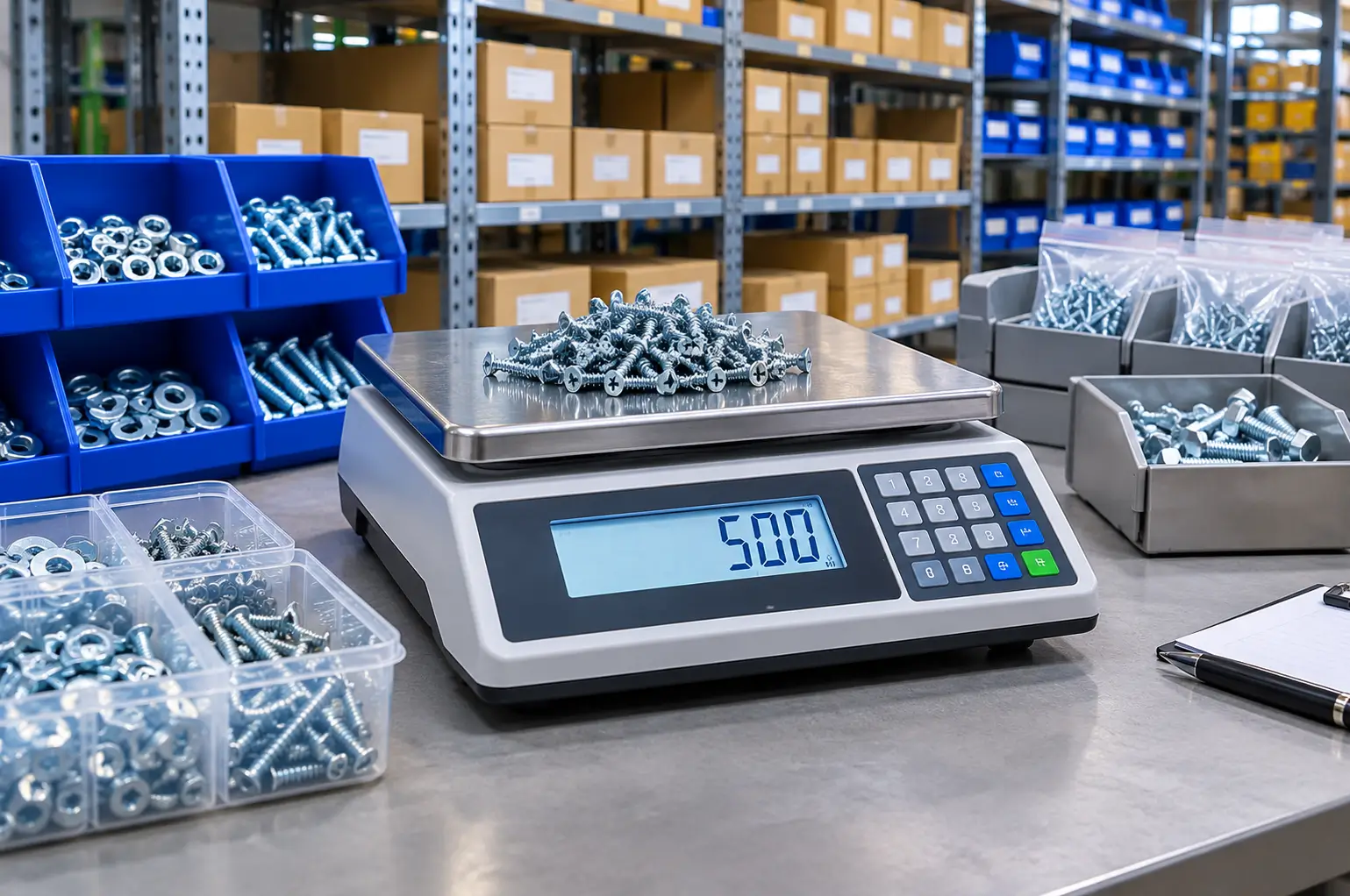
Counting scales are digital weighing devices designed to determine the quantity of identical items placed on their platform. Instead of displaying only total weight, they calculate the number of pieces using the average weight of an individual item.
They are particularly useful for businesses handling products such as:
- Nuts, bolts, screws, and washers
- Electronic components and connectors
- Plastic fittings and packaging materials
- Small machinery parts
- Uniform manufacturing components
Unlike traditional weighing equipment, counting scales combine weight measurement with quantity calculation.
Businesses looking for suitable equipment can explore the counting scales available at Al Falah Scales to understand their options.
How Do Counting Scales Work?
Counting scales operate using a measurement called Average Piece Weight (APW).
First, an operator places a known quantity of identical items on the scale. The device determines their combined weight and calculates the average weight of each piece.
For example, suppose 20 identical metal components weigh 200 grams. Each component has an average weight of 10 grams.
If another batch weighs 2,000 grams, the counting scale estimates that it contains 200 components.
This process eliminates repetitive manual counting and allows businesses to verify large batches efficiently.
The accuracy of these measurements depends on the equipment’s weighing mechanism. Understanding what a load cell is and how it works provides useful insight into how digital weighing devices detect and measure weight.
Why Inventory Accuracy Matters for Businesses
Inventory accuracy directly influences business performance.
Incorrect stock quantities can lead to unnecessary purchasing, product shortages, delayed shipments, and increased storage expenses.
For example, a manufacturing company may believe it has enough components to complete an order. However, an inaccurate stock count could leave production waiting for missing materials.
Reliable inventory records help businesses plan purchases, manage resources, and fulfil orders confidently.
Counting scales support these objectives by making physical stock verification faster and more consistent.
How Counting Scales Improve Inventory Accuracy
1. Reduce Human Counting Errors
Manually counting hundreds of small components can be exhausting. Employees may accidentally skip items, count the same piece twice, or lose track during interruptions.
Counting scales minimise these problems by calculating quantities automatically.
Although operators must provide accurate reference samples, the process reduces dependence on repetitive manual counting.
2. Speed Up Inventory Counting
Traditional inventory counting can consume several working hours, particularly when warehouses store thousands of identical components.
Counting scales make this process significantly faster.
Employees can place suitable batches on the weighing platform and obtain estimated quantities almost immediately.
This saves valuable working time and allows warehouse teams to focus on receiving, packing, and dispatching products.
3. Improve Goods Receiving Accuracy
When suppliers deliver products, businesses must verify that received quantities match purchase orders.
Counting scales allow receiving teams to check batches before accepting inventory into storage.
For example, if a supplier delivers a carton containing 1,000 screws, employees can verify the approximate quantity using weight rather than counting every screw individually.
Detecting discrepancies early prevents incorrect stock records and supports better supplier accountability.
4. Support Accurate Order Fulfilment
Dispatching incorrect quantities can damage customer relationships and increase return costs.
Counting scales help warehouse employees verify the number of identical items prepared for shipment.
This is particularly useful for industrial distributors handling orders containing hundreds of small mechanical components.
More reliable quantity checks reduce the likelihood of shortages, incorrect deliveries, and repeated packing work.
5. Make Cycle Counting Easier
Cycle counting involves regularly checking selected inventory items instead of waiting for an annual stocktake.
Counting scales simplify this process by allowing employees to verify quantities without lengthy manual counting.
Businesses can concentrate on fast-moving products, valuable components, or items frequently affected by discrepancies.
Regular verification helps identify inventory problems before they disrupt operations.
6. Improve Purchasing Decisions
Accurate inventory information allows businesses to purchase materials more effectively.
When stock records reflect actual quantities, purchasing teams can avoid unnecessary orders and identify shortages earlier.
Counting scales support better purchasing decisions by improving the reliability of physical inventory measurements.
Industries That Benefit from Counting Scales
Manufacturing and Engineering
Manufacturing companies frequently handle nuts, bolts, washers, and assembly components.
Counting scales help verify quantities before materials enter production, reducing interruptions caused by missing parts.
Warehousing and Distribution
Warehouses use counting scales to check incoming shipments, prepare orders, and perform routine stock verification.
Their efficiency becomes particularly valuable when businesses manage large quantities of identical items.
Electronics Industry
Electronic components are often small and difficult to count manually.
Suitable high-resolution counting scales help businesses verify component quantities while reducing repetitive handling.
Food and Packaging Businesses
Packaging operations may use counting scales for uniform caps, closures, and other small accessories.
Companies exploring weighing equipment for production environments can also read about the best weighing scales for food and beverage industries to understand different applications.
How to Choose the Right Counting Scale
Selecting a suitable counting scale requires evaluating the products being counted and the working environment.
Weighing capacity: Ensure the scale supports the maximum expected batch weight, including containers.
Measurement resolution: Lightweight components require greater sensitivity for reliable counting.
Platform size: Choose a platform large enough for the trays or containers used during daily operations.
Sampling features: Reliable sample calculation improves average piece weight estimation.
Durability: Industrial facilities require equipment designed for regular use.
The load cell also influences weighing performance. Businesses selecting equipment can explore how to choose the right load cell for a weighing system for additional technical guidance.
Best Practices for Accurate Counting
Even a high-quality counting scale requires correct operation.
Always position the equipment on a stable surface, use the tare function to exclude container weight, and select representative reference samples.
Avoid mixing different components because counting scales calculate quantities using average individual weight.
Regular calibration and performance checks are also important.
Businesses operating in humid or frequently cleaned environments should consider the benefits of waterproof weighing scales for industrial applications.
Final Thoughts
Accurate inventory management requires dependable equipment and consistent verification procedures.
Counting scales help businesses reduce manual counting errors, accelerate stocktaking, improve order fulfilment, and maintain more reliable inventory information.
For UAE warehouses, manufacturers, and distributors handling identical components, choosing appropriate counting equipment can significantly improve daily operational efficiency.
Explore Al Falah Scales for commercial and industrial weighing solutions suited to different business requirements.
Frequently Asked Questions (FAQs)
What is a counting scale used for?
A counting scale calculates the quantity of identical components using their total weight and average individual piece weight.
How accurate are digital counting scales?
Accuracy depends on measurement resolution, sample quality, component weight consistency, and proper calibration.
Can counting scales reduce inventory errors?
Yes. They reduce repetitive manual counting and help operators verify quantities more consistently.
Which businesses benefit most from counting scales?
Manufacturers, warehouses, electronics suppliers, packaging companies, and industrial distributors commonly benefit from counting scales.
Can counting scales measure very small items?
Yes, provided the scale has sufficient resolution and the items have reasonably consistent individual weights.
What is Average Piece Weight?
Average Piece Weight is the calculated weight of one component, determined using a known sample quantity.
Do counting scales require calibration?
Yes. Regular calibration and verification help maintain reliable weight measurements and counting performance.
Can counting scales connect to inventory software?
Some models offer connectivity features that allow weighing and counting information to be transferred to compatible systems.
Are counting scales suitable for warehouse operations?
Yes. They are useful for receiving deliveries, preparing orders, checking inventory, and performing routine stock counts.
Where can I find counting scales in the UAE?
Businesses can explore weighing equipment and request suitable options through Al Falah Scales.