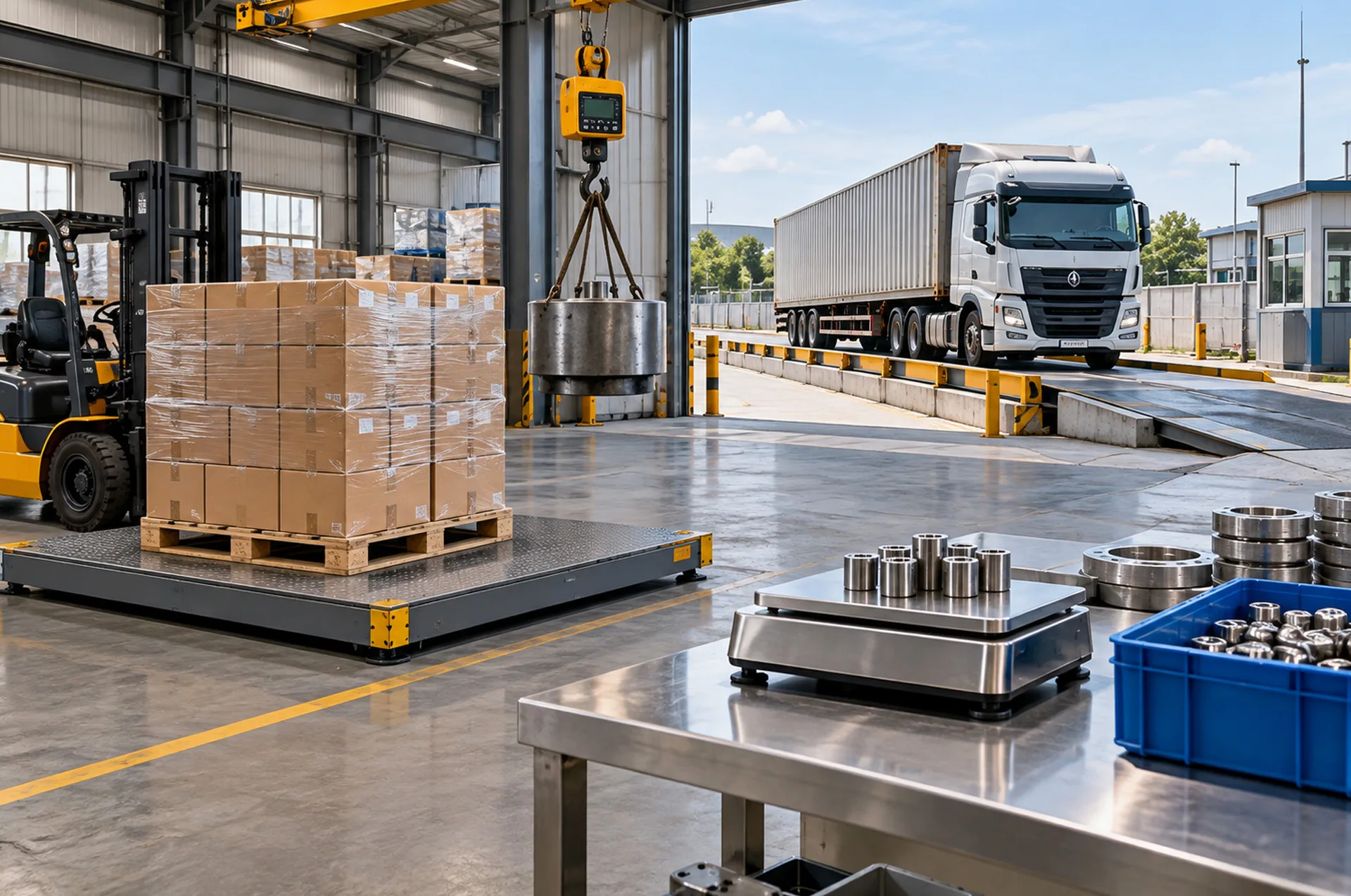
Walk into almost any warehouse, factory, distribution centre or production facility and weighing is happening somewhere in the workflow. Raw materials arrive, finished products leave, boxes are packed, drums are filled and pallets move from one department to another.
When those weights affect inventory, pricing or production, guessing is not an option.
That is why choosing the right industrial platform scale deserves more thought than simply comparing maximum capacities.
A platform scale that works perfectly for cartons in a clean warehouse may not survive long in a wet production area. Likewise, buying a 3,000 kg scale for loads that rarely exceed 300 kg may give you more capacity than you need without necessarily giving you the resolution your application requires.
At Al Falah Scales, businesses can find weighing equipment for different commercial and industrial applications. Before selecting a platform scale, however, it helps to understand exactly what separates the right system from one that merely looks suitable on paper.
Start With What You Are Actually Weighing
This sounds obvious, but it is where many purchasing mistakes begin.
Do you need to weigh individual cartons, bags of raw material, drums, machinery parts or complete pallets?
The shape and handling method of the load influence the platform size, required capacity and installation style.
For example, a warehouse weighing pallets moved by pallet trucks may need a wider and stronger platform than a production facility weighing relatively compact containers.
Do not choose a scale solely from a specification sheet. Think about the real object being placed on it several times a day.
Ask:
- What is the normal load weight?
- What is the heaviest possible load?
- What are its dimensions?
- How will operators place it on the scale?
- How frequently will the scale be used?
Those answers immediately narrow down your options.
Choose the Right Weighing Capacity
Maximum capacity is one of the first specifications buyers notice, but bigger is not automatically better.
If the heaviest material you expect to weigh is around 500 kg, you need enough headroom above that figure for safe daily operation. At the same time, purchasing a system designed for extremely heavy loads when you mostly weigh light items may not be the smartest choice.
Capacity should reflect both your current operation and realistic future needs.
Industrial environments can also involve accidental overloading. A forklift operator may lower a load heavier than expected, or a pallet may contain more material than usual.
For this reason, discuss normal operating capacity as well as possible peak loads with your weighing-equipment supplier.
Pay Attention to Scale Resolution and Accuracy
Capacity and accuracy are related but they are not the same thing.
Imagine two scales that can both handle 1,000 kg. One may display weight in larger increments while another provides finer readings.
Which one is better depends on the application.
If you are simply checking whether a heavy pallet is roughly within an acceptable shipping weight, very fine resolution may not be necessary. If you are weighing valuable materials or controlling precise quantities in production, smaller weight increments can become much more important.
Before buying, determine the smallest weight difference your operation actually needs to identify.
Select a Platform Size That Matches Your Loads
A scale with suitable capacity can still be inconvenient if its physical platform is too small.
Ideally, the item should fit comfortably on the weighing surface without unstable overhang.
Measure your commonly used pallets, containers, bins or products before deciding.
You should also consider how much floor space is available around the scale.
A larger platform may make weighing easier, but it can create unnecessary congestion in a compact production area. The goal is to balance usable weighing space with the physical layout of the workplace.
Consider How Materials Will Be Loaded
Industrial weighing is rarely isolated from material handling.
How will products reach the scale?
If workers manually place bags or cartons onto it, a conventional raised platform may work perfectly well. If loads arrive on pallet trucks, trolleys or similar equipment, platform height and access become much more important.
For some operations, a low-profile platform reduces the effort required to move goods onto the weighing surface.
Other sites may use ramps or install the platform in a way that supports smoother movement between the floor and weighing area.
The right solution should improve workflow rather than turn each weighing operation into an obstacle.
Think About Your Industrial Environment
A platform scale inside an air-conditioned warehouse faces very different conditions from one installed in a food plant, loading area or dusty manufacturing facility.
Before choosing the equipment, look at its actual surroundings.
Will it be exposed to:
- Water or frequent cleaning?
- Dust and powder?
- Chemicals?
- Heavy vibration?
- Humidity?
- Outdoor conditions?
- Constant impact from loaded equipment?
The platform material, finish, load cells and electronics should be suited to those conditions.
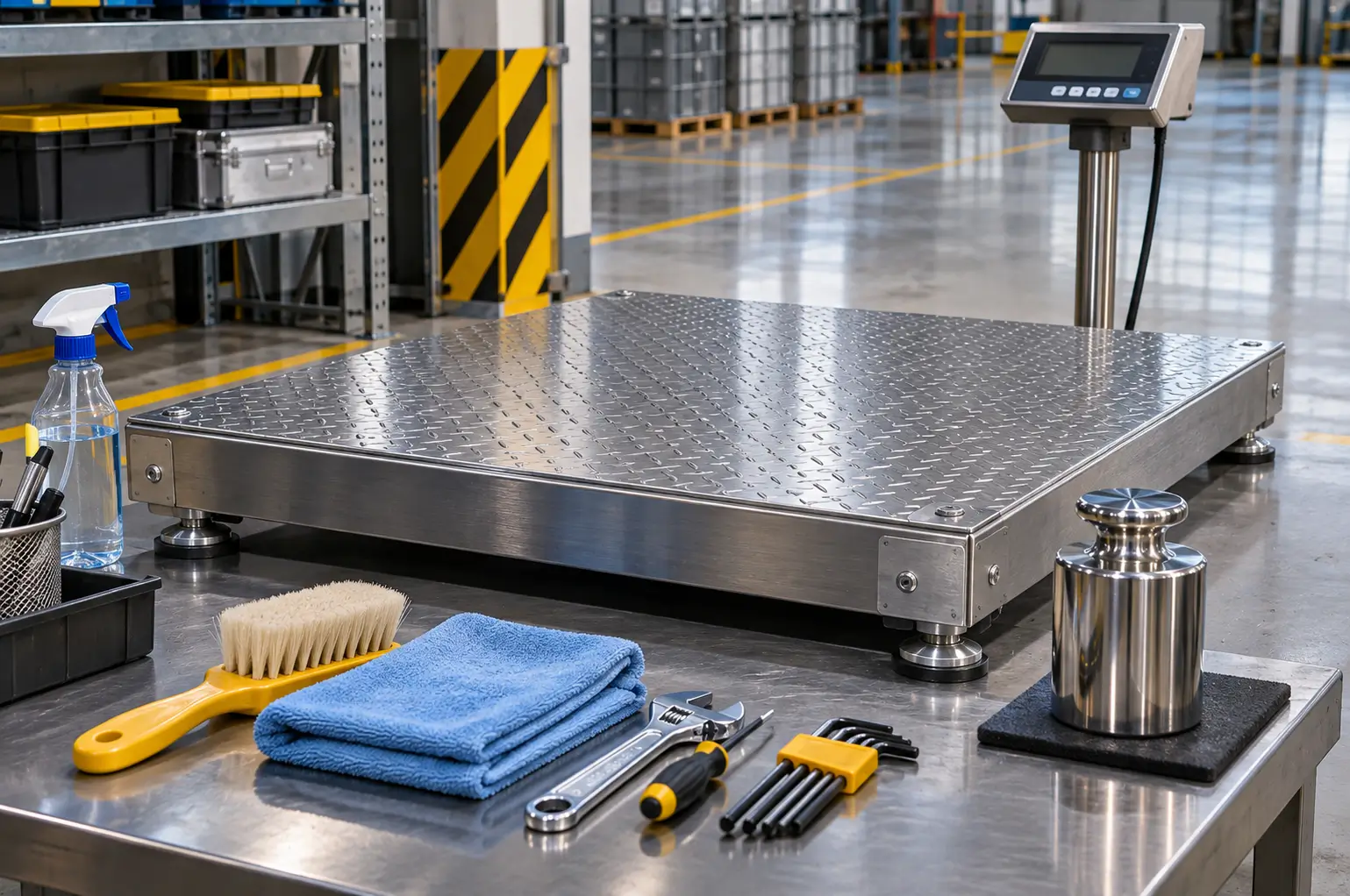
Stainless-steel equipment, for example, may be preferable in applications where hygiene, moisture resistance and frequent cleaning are important.
A more conventional industrial finish may be perfectly suitable for a dry warehouse.
Paying extra for environmental protection you do not need can increase cost unnecessarily. Ignoring the environment entirely can cost much more through premature equipment failure.
Don’t Ignore the Load Cells
The visible platform gets most of the attention, but the sensors beneath it perform the actual measurement.
These sensors are called load cells.
When weight is applied to the platform, load cells detect the force and convert it into an electrical signal. The weighing electronics then process those signals and calculate the displayed weight.
This means the reliability of your platform scale depends heavily on the quality and correct installation of its load cells.
Al Falah Scales supplies different load cell solutions for industrial weighing applications.
When comparing scales, ask about load-cell configuration, suitability for the operating environment and future replacement availability rather than focusing only on the platform itself.
Choose the Right Weighing Indicator
The indicator is where your operator interacts with the scale.
For a basic application, a straightforward digital display may be all you need. More demanding operations may require functions such as tare weighing, accumulation, counting, data output or connection with other systems.
Visibility also matters.
If the operator stands several metres away from the platform, display size and installation position can affect daily convenience.
Explore available weighing indicators when planning a complete weighing setup rather than treating the indicator as an afterthought.
Think About Data Before You Need It
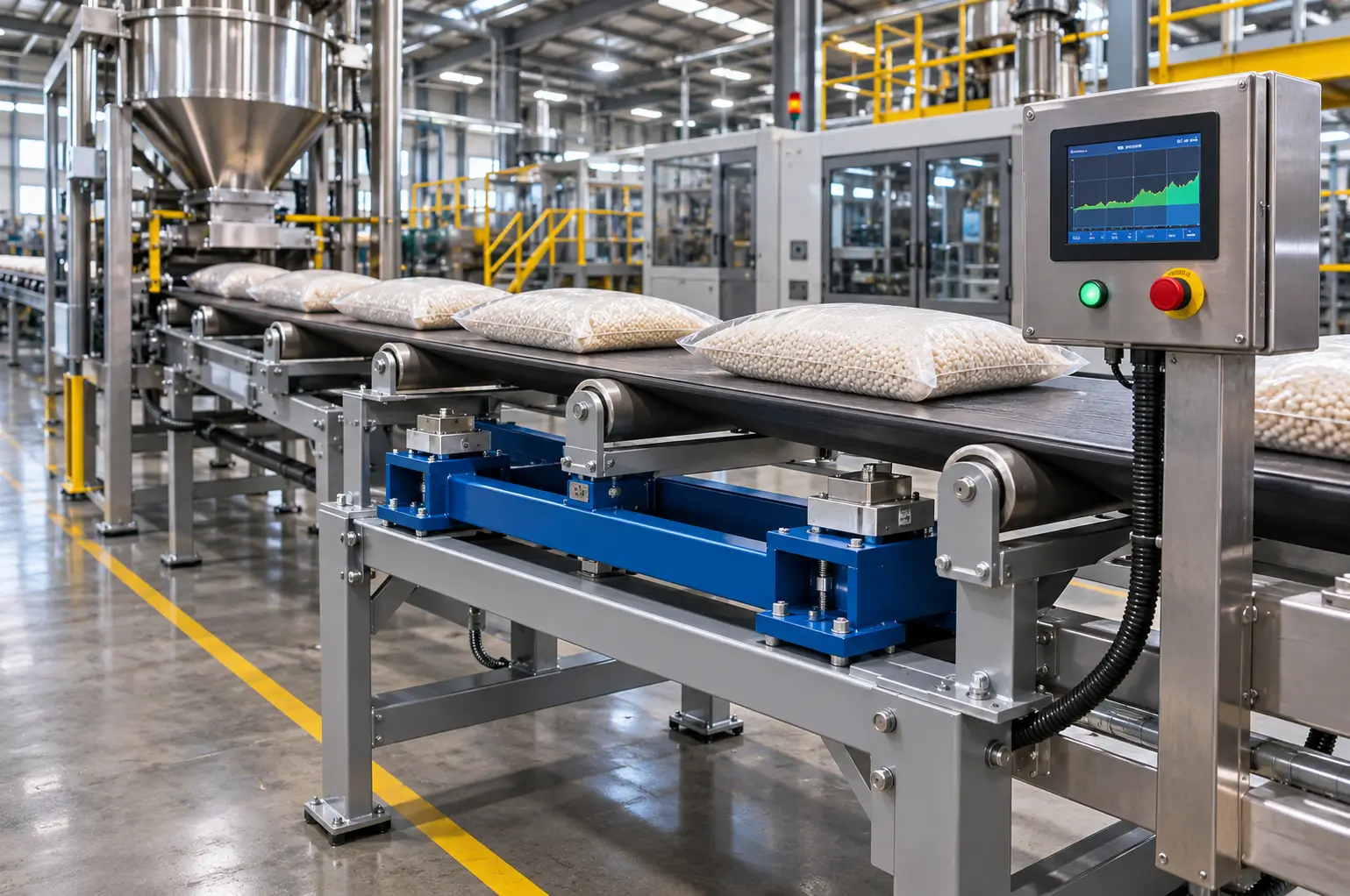
Industrial weighing increasingly connects with broader business processes.
Today you may only need an operator to read the weight from the display. Six months later, you may want those weights recorded digitally or transferred to another system.
Depending on the weighing equipment and indicator, connectivity can help reduce manual recording and improve traceability.
Before purchasing, ask whether you may eventually need:
- Printed weight records
- Computer connectivity
- Data logging
- ERP integration
- Production-system integration
- Barcode operations
- Remote displays
Planning ahead is often easier than replacing equipment later because it cannot support your growing workflow.
Consider Cleaning and Maintenance Access
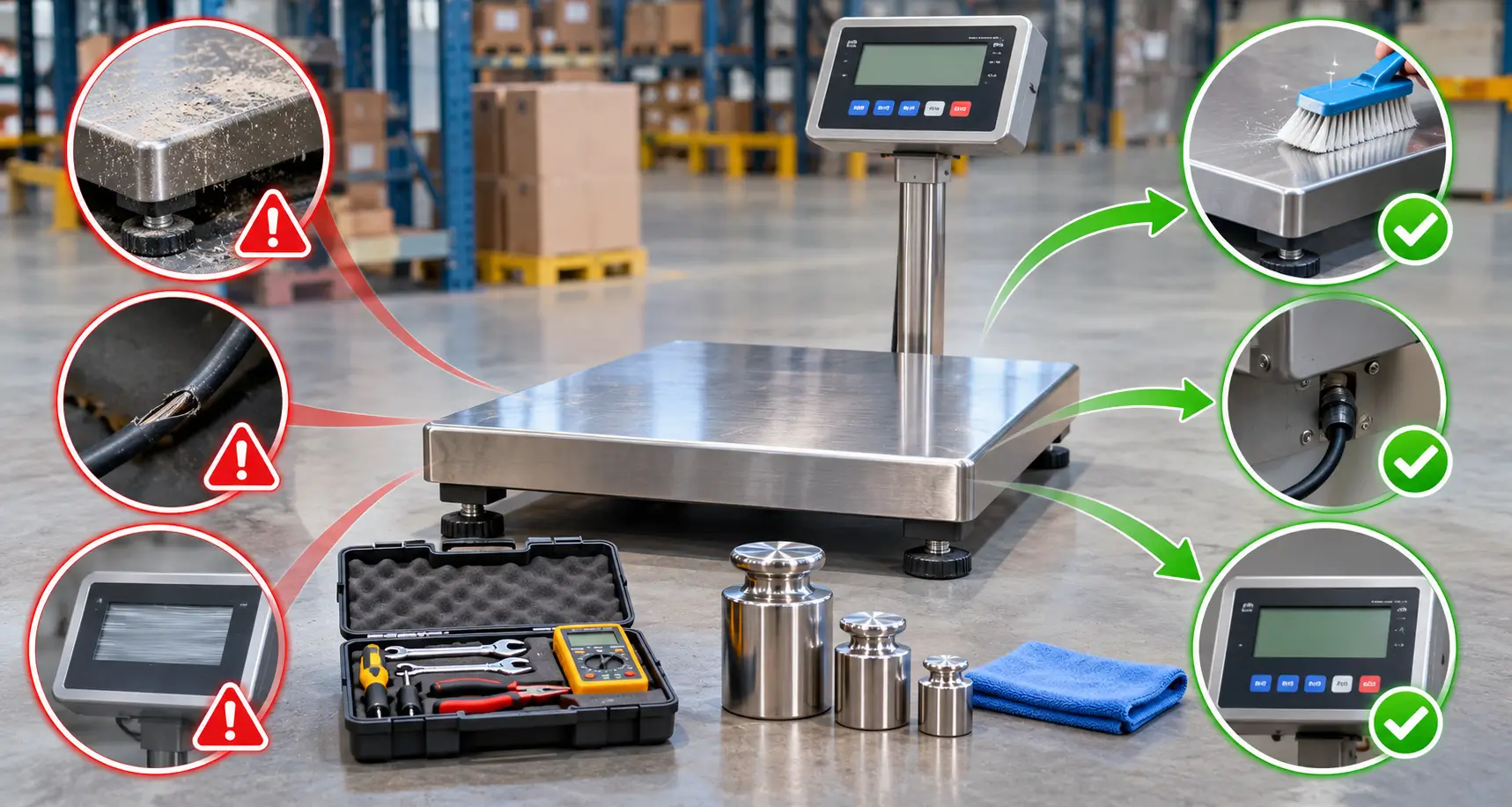
A platform scale works on the floor, which means dirt, dust, packaging material and production debris can collect around or beneath it.
If employees regularly wash the area, cleaning becomes an even bigger consideration.
Look at how easily operators or technicians can access the platform and critical components.
Routine cleaning helps prevent material buildup from interfering with the mechanical movement of the scale.
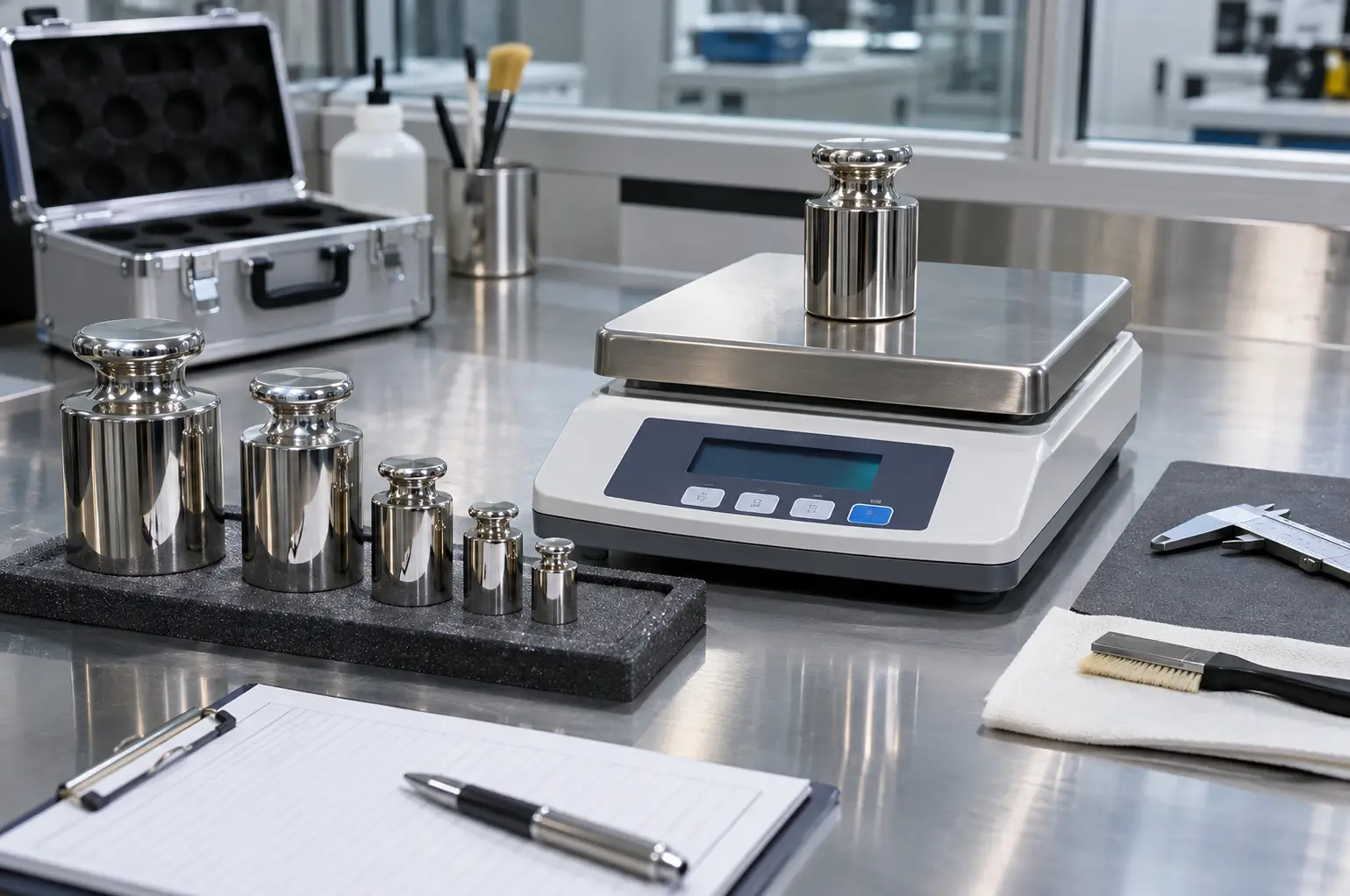
Industrial equipment also needs inspection and calibration over time. Choosing a system with accessible components and available technical support makes long-term ownership considerably easier.
For ongoing weighing-system support, businesses can explore Al Falah Scales services.
Don’t Choose Based on Price Alone
There is nothing wrong with comparing prices. The mistake is making price the only comparison.
A cheaper scale that repeatedly interrupts production, loses accuracy or requires difficult-to-source replacement parts can become expensive quickly.
Instead, consider total value:
Purchase price + reliability + accuracy + maintenance + expected lifespan + technical support.
Industrial scales are working tools. Their job is to provide dependable measurements day after day.
That reliability often matters more than saving a small amount during the initial purchase.
Platform Scale vs Weighbridge: Know the Difference
Platform scales and weighbridges perform the same basic function—measuring weight—but their applications are very different.
A platform scale typically handles goods, containers, drums, pallets and industrial materials.
A weighbridge is designed to weigh complete trucks and other heavy vehicles.
Businesses receiving bulk material by truck may actually use both: a weighbridge for incoming vehicles and platform scales within the warehouse or production process.
If vehicle weighing forms part of your operation, read our guide on What Is a Weighbridge and How Does It Work? to understand where a weighbridge fits into an industrial weighing system.
Questions to Ask Before Buying
Before approving your platform scale purchase, confirm five things:
What is the maximum load? What platform dimensions are required? How precise must the reading be? What environmental conditions will the equipment face? And what information needs to come out of the scale after the weight is measured?
If you can answer those questions clearly, choosing the correct industrial platform scale becomes much easier.
A good supplier should also understand your application before recommending a model.
That conversation is often more valuable than simply asking, “How much is a 1,000 kg scale?”
Frequently Asked Questions
What is an industrial platform scale?
An industrial platform scale is a heavy-duty weighing system with a flat weighing surface designed for goods such as cartons, containers, drums, components and pallets.
How do I choose the right capacity?
Start with the heaviest load you normally weigh, consider possible peak loads and allow reasonable capacity above normal operating weight without choosing an unnecessarily oversized system.
Does a higher-capacity scale mean better accuracy?
Not necessarily. Capacity tells you how much the scale can weigh. Accuracy and display resolution determine how precisely differences in weight can be measured.
What platform size should I choose?
Choose a surface large enough to safely support your usual pallets, containers or products while still fitting comfortably into your available workspace.
Are stainless-steel platform scales better?
They can be particularly useful in wet, hygienic, corrosive or frequently cleaned environments. A standard industrial construction may be sufficient for dry warehouse applications.
What does a load cell do?
A load cell detects the force applied to the weighing platform and converts it into an electrical signal that the weighing system uses to calculate weight.
Can platform scales connect to computers?
Some industrial weighing systems and indicators support computer or data connectivity. The available options depend on the chosen model and indicator.
How often should an industrial platform scale be calibrated?
The correct schedule depends on usage, required accuracy, operating conditions and applicable requirements. Heavily used or critical scales may need more frequent checks.
Can platform scales be used in warehouses?
Yes. Warehouses commonly use them for pallets, incoming goods, dispatch checks, inventory processes and other material-weighing tasks.
Where can I buy an industrial platform scale in the UAE?
Al Falah Scales provides weighing equipment for commercial and industrial applications in the UAE. Businesses can contact Al Falah Scales to discuss capacity, platform size and application requirements.
Final Thoughts
The best platform scale is not necessarily the biggest, most expensive or most feature-packed model.
It is the one that fits the way your business actually works.
Start with your load size and maximum weight. Then consider required accuracy, platform dimensions, material handling, environmental exposure, indicator functions, connectivity and maintenance.
Most importantly, think beyond today’s requirement.
An industrial scale may remain part of your production or warehouse operation for years. Selecting the right configuration from the beginning can improve weighing efficiency, reduce unnecessary handling and give your team reliable weight information when it matters.
For businesses looking for dependable industrial weighing solutions in the UAE, Al Falah Scales can help identify a weighing setup based on the actual application rather than simply matching a product to a capacity number.